 About Us">
 Enterprise Dynamics">




What Are Endoscopic Hemoclips and How Do They Work?
 Nov 25, 2026|
 View:5
Endoscopic hemoclips are specialized medical devices used during gastrointestinal (GI) endoscopic procedures to control bleeding through mechanical tissue compression. Delivered through or alongside an endoscope, these small clips grasp targeted tissue or blood vessels to achieve mechanical hemostasis without relying on thermal energy.
They are commonly used in selected cases of gastrointestinal bleeding, post-polypectomy bleeding, and tissue closure following endoscopic procedures such as endoscopic mucosal resection (EMR) and endoscopic submucosal dissection (ESD).
Understanding how endoscopic hemoclips work, their different designs, and their clinical applications helps healthcare professionals and medical device distributors select appropriate products for different endoscopic procedures.
1. What Are Endoscopic Hemoclips?
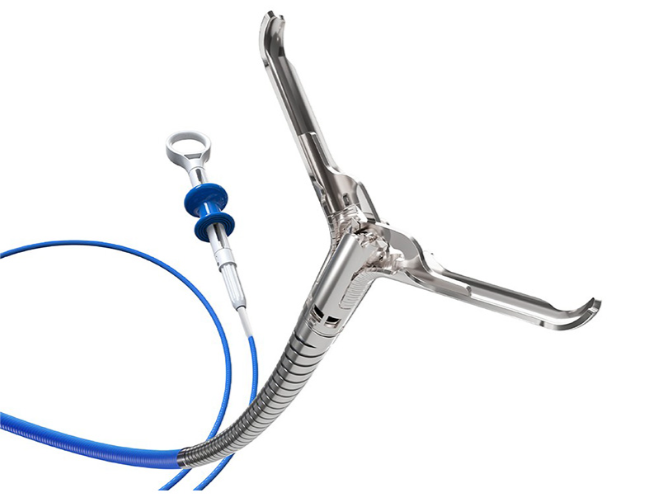
Endoscopic hemoclips, also called endoscopic hemostatic clips, are small mechanical devices designed to stop gastrointestinal bleeding and close selected tissue defects during endoscopic procedures. They are delivered using a specialized catheter or mounting system that works with a gastrointestinal endoscope.
Unlike thermal hemostasis devices, which use heat to coagulate bleeding tissue, hemoclips work through mechanical compression. When the clip jaws close around the target tissue, they apply pressure to the bleeding point or surrounding tissue, helping compress the blood vessel and achieve hemostasis.
These devices are particularly useful in minimally invasive gastrointestinal procedures because they allow clinicians to treat selected bleeding sites through an endoscope rather than requiring conventional open surgery.
Main Components of an Endoscopic Hemoclip
A conventional through-the-scope endoscopic hemoclip system generally consists of several functional components. Their exact design varies by manufacturer and product model.
| Component | Primary Function |
|---|---|
| Clip Jaws | Grip and compress the target tissue or blood vessel to achieve mechanical hemostasis. |
| Clip Arms | Provide the structural support required for opening, positioning, and closing the clip. |
| Delivery Catheter | Transports the clip through the endoscope working channel to the treatment site. |
| Control Handle | Allows the operator to control the delivery and deployment process. |
| Rotation Mechanism | Available in compatible models to help adjust clip orientation before deployment. |
The combination of these components enables accurate positioning and controlled deployment during gastrointestinal endoscopy.
How Are Hemoclips Different from Surgical Clips?
Although both devices use mechanical compression, endoscopic hemoclips and conventional surgical clips are designed for different delivery methods and clinical applications.
Endoscopic hemoclips: Designed for delivery through an endoscope or a specialized endoscopic mounting system to treat selected GI bleeding sites and tissue defects.
Surgical clips: Commonly used during laparoscopic or open surgical procedures to ligate vessels, secure tissue, or close structures.
Their dimensions, delivery mechanisms, material specifications, and intended uses differ. They should not be considered interchangeable.
2. How Do Endoscopic Hemoclips Work?
The working principle of endoscopic hemoclips is based on mechanical hemostasis. Once the endoscopist identifies a bleeding point, the clip is guided to the target area and deployed to grasp the tissue or compress the responsible vessel.
The process generally involves five main steps.
Endoscopic Visualization
The endoscope is introduced into the gastrointestinal tract. The physician examines the mucosal surface, identifies the bleeding source, and evaluates the surrounding tissue.
Hemoclip Delivery
The clip delivery catheter is introduced through the endoscope working channel. The operator advances the device toward the selected treatment site under direct endoscopic visualization.
Clip Positioning
The clip jaws are positioned around the target vessel or tissue. Where the device supports rotation or repositioning, the operator may adjust its orientation before final deployment.
Mechanical Closure
The clip is closed to grasp and compress the target tissue. This mechanical pressure helps reduce or stop blood flow at the bleeding point.
Clip Release and Verification
After confirming the intended position, the operator releases the clip according to the device instructions. The treatment site is inspected to evaluate hemostasis before the delivery system is withdrawn.
How Does Mechanical Hemostasis Stop Bleeding?
When a hemoclip closes around the target tissue, its jaws create localized compression. This pressure can compress the bleeding vessel and bring the surrounding tissue together, helping interrupt blood flow at the treatment site.
Depending on the clinical condition, the clip may also support tissue approximation and closure of a mucosal defect. The objective is to achieve effective mechanical control while minimizing unnecessary injury to surrounding tissue.
Endoscopic hemoclips achieve hemostasis through mechanical compression rather than thermal coagulation. Their effectiveness depends on appropriate patient selection, tissue accessibility, clip positioning, tissue capture, and the specific device design.
3. What Are Endoscopic Hemoclips Used For?
Endoscopic hemoclips are used in various gastrointestinal procedures involving bleeding control and selected tissue closure. Their suitability depends on the bleeding source, lesion characteristics, anatomical location, and clinical assessment.
3.1 Gastrointestinal Bleeding Control
One of the primary applications of endoscopic hemostatic clips is the treatment of selected non-variceal gastrointestinal bleeding.
Examples include:
Peptic ulcer bleeding: Mechanical clipping may be used for appropriate ulcers with high-risk bleeding features, depending on the lesion and treatment strategy.
Dieulafoy's lesions: Through-the-scope clips are among the mechanical treatment options for selected bleeding lesions.
Mallory-Weiss tears: Clips may be considered for actively bleeding mucosal tears when clinically appropriate.
Diverticular bleeding: Endoscopic clips can be used to treat selected colonic diverticular bleeding sites.
Other non-variceal GI bleeding: Clips may be used for accessible bleeding vessels or focal lesions where mechanical treatment is appropriate.
For actively bleeding ulcers, clinical guidelines may recommend combining epinephrine injection with a second hemostatic modality, such as mechanical or thermal therapy. Clip placement should therefore be selected as part of an appropriate clinical treatment strategy rather than assumed to be suitable for every bleeding lesion.
3.2 Post-Polypectomy Bleeding Prevention and Treatment
Bleeding can occur during or after endoscopic polypectomy, particularly when larger or more complex lesions are removed.
Endoscopic hemoclips may be used to:
Control bleeding from a visible vessel after polyp removal.
Close selected resection sites when clinically indicated.
Reduce the risk of delayed bleeding in appropriately selected patients and lesions.
Whether prophylactic clipping is beneficial depends on factors such as lesion size, location, resection technique, and individual bleeding risk. Routine clipping is not necessary for every polypectomy site.
3.3 Closure of Mucosal Defects After EMR and ESD
Endoscopic mucosal resection (EMR) and endoscopic submucosal dissection (ESD) are minimally invasive techniques used to remove gastrointestinal lesions.
These procedures may leave mucosal defects that require additional management. Endoscopic clips can help approximate the edges of selected defects and support tissue closure.
Potential applications include:
Closure of suitable mucosal defects after EMR.
Closure of selected post-ESD defects.
Management of bleeding during or after endoscopic resection.
Closure of selected small tissue openings when the device is appropriate.
Conventional through-the-scope clips have limitations in tissue capture and defect size. Larger or full-thickness defects may require specialized closure devices or alternative treatment approaches.
4. Different Types of Endoscopic Hemoclips
Endoscopic hemoclips are available in different designs to meet varying procedural requirements. The main categories include through-the-scope clips, over-the-scope clips, and models with additional positioning or reopening features.
4.1 Through-the-Scope Clips (TTSC)
Through-the-scope clips (TTSC) are conventional endoscopic hemostatic clips delivered through the working channel of a gastrointestinal endoscope.
The clip is connected to a delivery catheter, which allows the operator to advance and position it under direct endoscopic visualization.
Key characteristics include:
Catheter-based delivery through the endoscope working channel.
Mechanical tissue grasping and compression.
Availability in different clip opening widths and catheter configurations.
Applications in selected GI bleeding control and tissue closure procedures.
Compatibility requirements based on endoscope channel diameter and product specifications.
TTSC devices are widely used in routine gastrointestinal endoscopic hemostasis. Many disposable endoscopic hemoclip products, including ATE Medical's disposable hemostatic clips, belong to this general product category. The specific delivery design should always be confirmed from the manufacturer's IFU.
4.2 Over-the-Scope Clips (OTSC)
Over-the-scope clips (OTSC) are specialized endoscopic clipping devices mounted on the distal end of an endoscope using a dedicated cap system.
Unlike conventional TTSC devices, OTSC systems do not pass through the standard working channel for deployment. Instead, the clip is released from the mounted cap to capture a larger amount of tissue.
Typical characteristics include:
Cap-mounted deployment system.
Generally larger tissue capture capacity than conventional TTSC devices.
Applications in selected complex GI bleeding cases.
Use for selected larger defects and gastrointestinal wall closure.
4.3 Rotatable and Repositionable Hemoclips
Some endoscopic hemoclips incorporate additional features to improve positioning and deployment control.
Depending on the model, these features may include:
Rotatable design: Allows the operator to adjust clip orientation before deployment.
Reopenable design: Allows the clip to be reopened and repositioned within the limits specified by the manufacturer.
Different jaw configurations: Provide alternative tissue-grasping geometries.
Different opening widths: Support different tissue capture requirements.
Not all endoscopic hemoclips offer these functions. Buyers should review the specific product specifications rather than assuming that all models have the same deployment capabilities.
TTSC vs. OTSC: What Is the Difference?
| Comparison | TTSC | OTSC |
|---|---|---|
| Full Name | Through-the-Scope Clip | Over-the-Scope Clip |
| Delivery Method | Through the endoscope working channel | Mounted on the distal endoscope tip |
| Clip Design | Conventional catheter-delivered clip | Cap-mounted clipping system |
| Tissue Capture | Generally suitable for targeted tissue or vessel capture | Generally allows capture of a larger tissue volume |
| Common Applications | Selected routine GI bleeding and mucosal defect closure | Selected complex bleeding and larger defect closure |
| Equipment | Compatible endoscope working channel | Dedicated cap-mounted delivery system |
Both systems provide mechanical tissue closure, but their designs and clinical applications differ. The appropriate device should be selected according to the lesion, anatomical location, procedural requirements, and physician's judgment.
5. What Are the Advantages of Disposable Endoscopic Hemoclips?
Disposable endoscopic hemoclips are designed for single-use applications in gastrointestinal endoscopic procedures. They offer several practical characteristics for healthcare providers, hospitals, and medical device distributors.
5.1 Mechanical Hemostasis Without Thermal Energy
Hemoclips use mechanical compression rather than thermal energy to control bleeding. This makes them an important option when a mechanical treatment approach is appropriate.
5.2 Targeted Tissue Grasping
The clip jaws are designed to grasp specific tissue areas or bleeding vessels under endoscopic visualization. Appropriate positioning helps support controlled tissue compression.
5.3 Minimally Invasive Delivery
Through-the-scope hemoclips are delivered through the endoscope working channel, allowing physicians to access selected gastrointestinal treatment sites without conventional open surgery.
5.4 Convenient Single-Use Design
Single-use products eliminate the need to reprocess the device between patients. They are supplied for one-time use according to the manufacturer's instructions, supporting standardized clinical workflows.
5.5 Applications Across Different GI Procedures
Depending on the product design and clinical indication, disposable endoscopic hemoclips can support various procedures involving gastrointestinal bleeding control and selected tissue closure applications.
6. How to Choose the Right Endoscopic Hemoclips?
For hospitals, endoscopy centers, medical device distributors, and healthcare procurement teams, selecting suitable endoscopic hemoclips requires more than comparing product prices. Technical compatibility, deployment characteristics, quality documentation, and supplier reliability should all be evaluated.
6.1 Endoscope Compatibility
Compatibility is one of the most important considerations when purchasing endoscopic hemostatic clips.
Buyers should check:
Endoscope working channel diameter.
Delivery catheter outer diameter.
Product compatibility with the intended endoscope models.
Device working length and access requirements.
A clip delivery system must meet the specified endoscope compatibility requirements to support appropriate device passage and deployment.
6.2 Clip Opening Width
Clip opening width determines the available jaw span before tissue capture. Different lesions and tissue configurations may require different opening dimensions.
Buyers should compare the available opening widths with their intended clinical applications and verify the manufacturer's stated specifications.
6.3 Catheter Length
The working length of the delivery catheter affects whether the device can reach the intended treatment site through the selected endoscope.
Procurement teams should confirm the available catheter lengths and compatibility with the endoscopes used in their facilities.
6.4 Clamping Performance and Deployment Control
Reliable tissue grasping and controlled deployment are essential product considerations.
When evaluating an endoscopic hemoclip supplier, buyers may request information about:
Clip opening and closing consistency.
Mechanical clamping performance.
Deployment smoothness.
Positioning and rotation capabilities, if applicable.
Product validation and quality inspection procedures.
6.5 Quality Management and Regulatory Documentation
Medical device distributors and hospitals should also evaluate the manufacturer's quality management system and product documentation.
Relevant purchasing considerations include:
Applicable ISO 13485 quality management certification.
Product registration and market-specific regulatory approvals.
Instructions for Use (IFU) and technical documentation.
Sterile packaging and validated sterilization information, where applicable.
Batch traceability and product quality records.
Documentation requirements vary between markets. Buyers should verify the validity and scope of relevant certificates and product approvals before procurement.
7. ATE Medical Disposable Hemostatic Clips
For healthcare providers and medical device distributors seeking disposable endoscopic hemostatic devices, ATE Medical provides disposable hemostatic clips designed for mechanical bleeding control during gastrointestinal endoscopic procedures.
ATE Medical Disposable Hemostatic Clips are intended to support tissue grasping, mechanical hemostasis, and stable closure during selected GI procedures. According to the product information, they are designed for managing bleeding associated with ulcers, polyps, surgical wounds, and other gastrointestinal lesions.
ATE Medical Disposable Hemostatic Clips
Designed for gastrointestinal endoscopic hemostasis, ATE Medical's disposable hemostatic clips provide a product solution for hospitals, healthcare providers, and international medical device distributors.
Designed for mechanical hemostasis during GI endoscopic procedures.
Intended for selected upper and lower gastrointestinal bleeding applications.
Supports tissue grasping and mechanical closure.
Designed for use in relevant endoscopic procedures, subject to product specifications.
Available with OEM and customized medical device solutions, subject to confirmation.
7.1 Product Applications
ATE Medical disposable endoscopic hemostatic clips are designed for applications including:
Gastrointestinal bleeding treatment: Mechanical clipping for selected upper and lower GI bleeding sites.
Endoscopic mucosal resection (EMR): Support for selected post-resection bleeding control and tissue closure applications.
Endoscopic submucosal dissection (ESD): Use in appropriate bleeding control and tissue closure procedures.
Polypectomy procedures: Support for managing selected bleeding sites following polyp removal.
Lesion marking and tissue closure: Additional applications where permitted by the specific product's intended use.
7.2 Product Specifications and Compatibility
When evaluating disposable endoscopic hemoclips, medical device distributors should review the technical specifications of each available model.
| Specification | Information to Confirm |
|---|---|
| Product Name | Disposable Hemostatic Clips |
| Device Category | Endoscopic hemostasis accessories |
| Intended Application | Mechanical hemostasis during gastrointestinal endoscopic procedures |
| Working Channel Compatibility | Refer to the technical specifications of the selected model |
| Clip Opening Width | Confirm available sizes with ATE Medical |
| Catheter Working Length | Confirm model-specific options with ATE Medical |
| Packaging and Sterility | Refer to the applicable product label and IFU |
| OEM and Customization | Contact ATE Medical for available options |
For detailed model information, compatibility requirements, and technical documentation, please visit the product page or contact the ATE Medical sales team.
Explore Disposable Hemostatic Clips
7.3 Why Work with ATE Medical?
Jiangsu ATE Medical Technology Co., Ltd. specializes in the development, manufacturing, and sales of endoscope accessories. Founded in 2013, the company provides products for minimally invasive diagnosis and treatment, serving international medical device markets.
Its product portfolio includes:
Disposable Biopsy Forceps
Disposable Cytology Brushes
Disposable Injection Needles
Disposable Polypectomy Snares
Disposable Hemostatic Clips
Disposable Grasping Forceps
Disposable Retrieval Devices
Other Endoscopy Accessories
ATE Medical has established a quality management system based on ISO 9001 and ISO 13485, according to its company information. The company also provides OEM and customized medical device solutions, including customized packaging and product labeling, subject to project requirements.
For international distributors and medical device companies, working with an experienced endoscopy accessory manufacturer can help simplify product sourcing and support long-term supply cooperation.
Looking for a Disposable Hemostatic Clips Supplier?
ATE Medical supports global medical device distributors, healthcare providers, and medical companies looking for disposable endoscopic accessories.
Contact our team to discuss product specifications, endoscope compatibility, OEM requirements, packaging, target markets, and order quantities.
8. Frequently Asked Questions About Endoscopic Hemoclips
Q1: What are endoscopic hemoclips used for?
Endoscopic hemoclips are used to control selected gastrointestinal bleeding sites through mechanical compression. They can also support tissue closure following procedures such as polypectomy, EMR, and ESD when clinically appropriate.
Q2: How do endoscopic hemoclips stop bleeding?
Endoscopic hemoclips stop bleeding by mechanically grasping and compressing the target tissue or blood vessel. This pressure helps reduce blood flow at the bleeding site and supports hemostasis without using thermal energy.
Q3: Are endoscopic hemoclips permanent?
Most conventional endoscopic hemoclips are not intended as permanent implants. Depending on the device design and clinical conditions, clips may remain attached during tissue healing and eventually detach naturally. Retention time varies by product and patient factors.
Q4: What is the difference between TTSC and OTSC?
TTSC devices are delivered through the endoscope working channel, while OTSC systems are mounted on the distal endoscope tip. OTSC devices generally provide a larger tissue capture capacity and are used in selected complex bleeding and defect closure cases.
Q5: Are disposable endoscopic hemoclips compatible with all endoscopes?
No. Compatibility depends on the working channel diameter, catheter dimensions, working length, and specific endoscope model. Always check the manufacturer's compatibility information and Instructions for Use before selecting a device.
Q6: Can endoscopic hemoclips be used after polypectomy?
Yes. Endoscopic hemoclips may be used to control post-polypectomy bleeding or prevent delayed bleeding in selected patients and lesions. The decision depends on factors such as polyp size, location, resection technique, and individual bleeding risk.
Q7: Can hemoclips be used after EMR and ESD?
Yes. Hemoclips can be used to control bleeding and close selected mucosal defects after EMR and ESD. However, conventional through-the-scope clips have limitations for larger defects, which may require specialized closure devices or alternative approaches.
Q8: What should distributors consider when purchasing endoscopic hemoclips?
Distributors should evaluate endoscope compatibility, clip opening width, catheter working length, deployment performance, quality management certification, regulatory documentation, sterile packaging, and OEM customization options.
Q9: How can I find a reliable disposable endoscopic hemoclips manufacturer?
Look for a manufacturer with relevant endoscopy device experience, a documented quality management system, appropriate product approvals, technical documentation, and consistent supply capabilities. Request product samples and model-specific specifications before placing bulk orders.
9. Conclusion
Endoscopic hemoclips are important mechanical hemostasis devices in modern gastrointestinal endoscopy. By grasping and compressing targeted tissue, they help control selected bleeding sites and support tissue closure without relying on thermal energy.
Understanding the differences between TTSC and OTSC systems, their clinical applications, and their technical requirements is essential for selecting suitable endoscopic hemostatic devices.
For medical device distributors, hospitals, and healthcare providers looking for disposable endoscopic accessories, ATE Medical offers disposable hemostatic clips and OEM customization support for international markets.
To learn more about ATE Medical's product specifications and supply solutions, visit the Disposable Hemostatic Clips product page or contact our team directly.
View ATE Medical Hemostatic ClipsSend an Inquiry
Medical References
ESGE Guideline: Endoscopic Diagnosis and Management of Nonvariceal Upper Gastrointestinal Hemorrhage.
ACG Clinical Guideline: Upper Gastrointestinal and Ulcer Bleeding.
ESGE Guideline Update 2026: Endoscopic Diagnosis and Management of Peptic Ulcer Bleeding.